Three Researchers, AI and a Breach at OpenAI: What This Really Says About the Future of Technical Skills
Three security researchers reportedly used Claude while uncovering vulnerabilities in OpenAI's systems. The bigger lesson isn't the breach — it's how AI amplifies deep technical expertise, and what that means for the skills students should build next.
Aiexl. · 21 September 2026 · 3 min read

Three researchers and an AI model just walked through the defences of one of the most valuable AI companies in the world.
That sentence alone is enough to make headlines. But if you stop at the headline, you miss the story that actually matters — especially if you are a student or early-career engineer deciding what to learn next.
What actually happened
According to reporting by The Washington Post, TechCrunch and The Register, three security researchers uncovered vulnerabilities in OpenAI's systems — and they used Anthropic's Claude as part of their work. Details continue to emerge, and OpenAI has published its own perspective in a piece titled "The Defender's Window."
The facts worth holding on to are simple: a very small team, armed with deep security knowledge and a frontier AI model, was able to find weaknesses in the infrastructure of a frontier AI lab.
That combination — expertise plus AI — is the real story.
The lesson is not "AI is dangerous"
It would be easy to read this as a warning about AI models being misused. That reading isn't wrong, but it's incomplete.
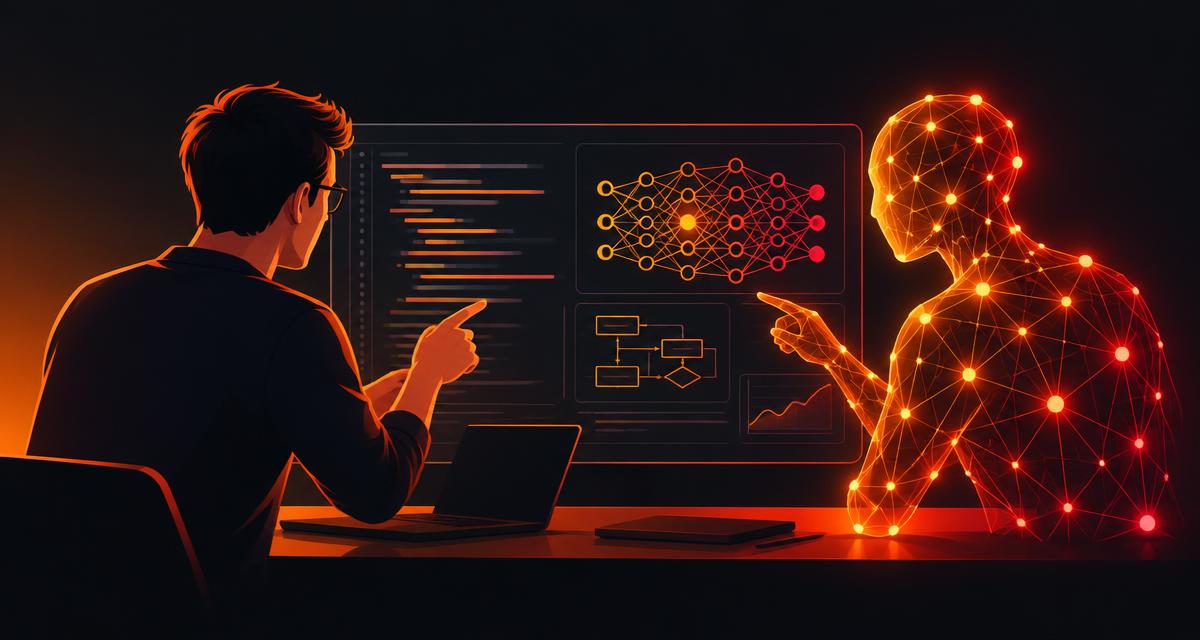
The more useful reading is about AI and cybersecurity as a pairing. The researchers were not replaced by Claude. They directed it. Their understanding of systems, attack surfaces and security thinking is what made the model useful. AI amplified their expertise; it did not substitute for it.
This is a pattern we are seeing across technical fields. As we explored in our earlier piece on AI helping to build AI, the engineers getting the most out of these tools are the ones with the strongest fundamentals.
What this means for future technical skills
If a three-person team with the right skills and the right AI tools can pressure-test a frontier lab, the skill profile of the future engineer becomes clearer:
- Deep domain knowledge still wins. Security, systems, networking, and how software actually fails — AI makes this knowledge more powerful, not less relevant.
- AI fluency is now a core technical skill. Knowing how to direct, verify and challenge AI output is becoming as fundamental as knowing how to debug.
- Judgement is the differentiator. The researchers knew which questions to ask and which answers to trust. That judgement comes from experience, not prompting tricks.
- Small teams can now do big work. AI compresses what used to require entire departments. That raises the ceiling for individuals who combine expertise with AI.
For students, the takeaway is not "learn prompt engineering." It is: build real technical depth — in security, in systems, in engineering — and learn to work with AI on top of it.
The defender's perspective
OpenAI's response, and its "Defender's Window" framing, point at something important: the same AI capabilities that help attackers find weaknesses can help defenders close them faster. Security is becoming an AI-assisted discipline on both sides.
That means demand is growing for people who understand both halves — security fundamentals and modern AI systems. AI cybersecurity skills are moving from a niche specialisation to a mainstream engineering career path.
What students should take from this
Stories like this can feel distant — frontier labs, elite researchers. But the underlying shift reaches every engineering career:
The bar is no longer "can you code?" It is "do you understand systems deeply enough to direct AI well — and catch it when it's wrong?"
That is exactly the combination we focus on in the CAIEE certification: applied AI engineering built on real technical fundamentals, with projects that force you to think like the people in this story — not just use the tools.
The bigger picture
Three researchers and an AI model just reminded the industry that expertise, amplified by AI, is the most valuable combination in technology right now.
The breach will be patched. The lesson shouldn't be.
Sources & references
Build a career in AI with CAIEE
The Certified AI Excellence Engineer programme turns these ideas into practical, portfolio-ready skills.
Explore CAIEE