Coding Is Moving From “AI Assistant” Toward Multi-Agent Software Development
JetBrains Air points toward development environments where engineers coordinate multiple agents while retaining context, review and governance.
Aiexl. · 24 September 2026 · 2 min read

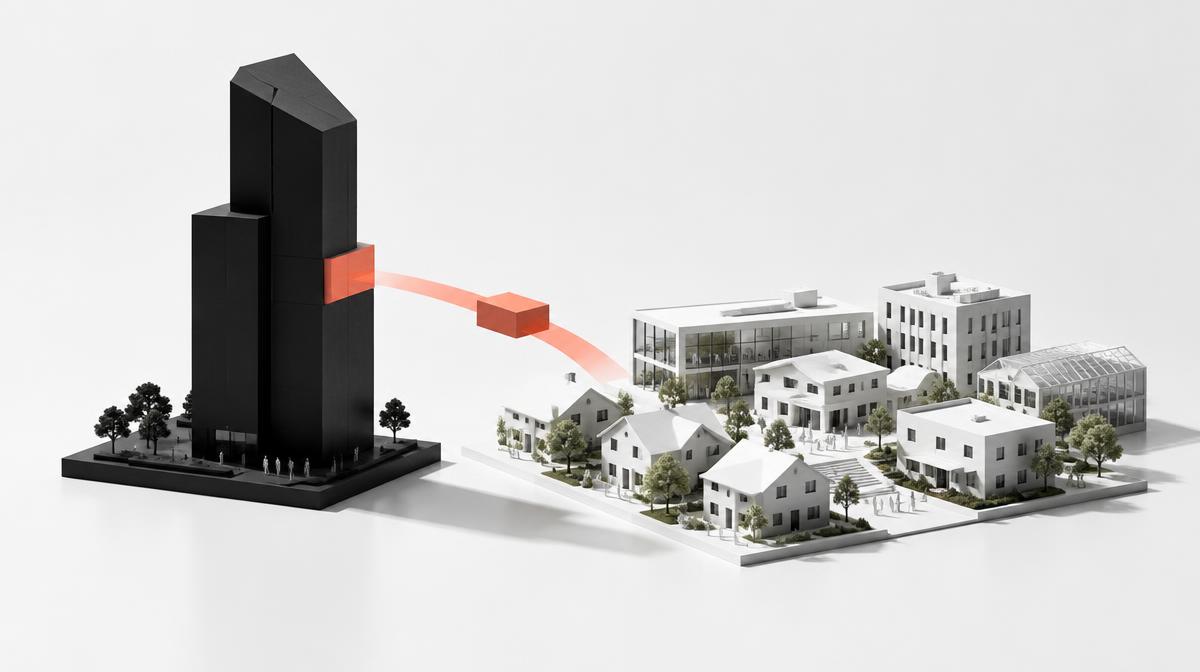
AI coding tools began for many developers as autocomplete or a chat window beside the editor. JetBrains Air points toward a broader model: software development coordinated across multiple agents, models and environments.
JetBrains describes Air as a system of products for agentic software development. Its direction includes work initiated and coordinated across development environments, shared context, cloud agents, automations, governance and controls for organisational AI costs.
Earlier versions of the environment demonstrated developers running several coding agents concurrently with isolated workspaces and review tools. The latest announcement expands that idea beyond a single coding assistant toward a wider system for initiating, executing, coordinating and reviewing agent-driven work.
These are product-direction claims from JetBrains. Predictions about how quickly the approach changes employment remain analysis rather than established labour-market outcomes.
The durable skill is not one product
Students should not interpret this as a requirement to master a particular tool. Development products and model providers will continue to change.
The more durable shift is in the engineer’s responsibilities:
Writing every line → Asking AI for code → Delegating defined tasks → Supervising several agents → Reviewing architecture and outputs
As generation becomes easier, specifications become more important. An agent needs a clear objective, constraints and acceptance criteria. Engineers still need to recognise incorrect assumptions, unsafe dependencies, weak tests and architecture that will not scale.
Multi-agent development can also create coordination problems. Two agents may change overlapping code, misunderstand shared context or produce individually plausible changes that conflict when combined. Effective supervision therefore depends on version control, testing, debugging, system design and careful review.
A developer who cannot recognise incorrect code does not become a strong developer simply because a system can generate more of it.
Takeaway
The developer’s role may move from producing every line toward directing and reviewing systems that produce software. Strong fundamentals become more—not less—important when the volume of generated work increases.
Sources & references
Build a career in AI with CAIEE
The Certified AI Excellence Engineer programme turns these ideas into practical, portfolio-ready skills.
Explore CAIEE